The Future of EPR: Navigating Global Regulations and Opportunities
Extended Producer Responsibility (EPR) is transforming the way businesses manage product lifecycles and waste management. As governments introduce stricter environmental regulations, organizations must adopt sustainable practices to ensure compliance, reduce environmental impact, and strengthen their ESG performance. Understanding the future of EPR is essential for businesses operating in today's circular economy.
1. What is Extended Producer Responsibility (EPR)?
Environmental Policy:
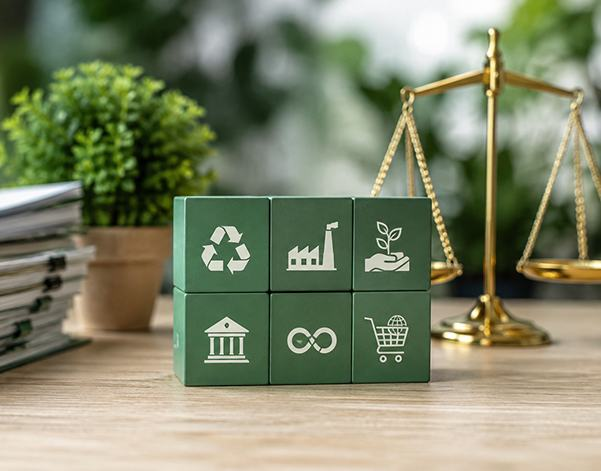
Extended Producer Responsibility (EPR) is an environmental policy that makes producers responsible for collecting, recycling, and disposing of products after consumer use. The framework promotes sustainable product design, waste reduction, and resource recovery while supporting the transition toward a circular economy..

2. Global EPR Regulations are Rapidly Evolving
Global EPR Regulations:
Countries worldwide are strengthening EPR regulations for plastics, e-waste, batteries, packaging, tyres, and textiles. The European Union, India, Canada, and several Asia-Pacific nations continue introducing stricter compliance requirements, making regulatory monitoring and reporting more important than ever.

3. Business Opportunities Beyond Compliance
EPR Compliance and Business Opportunities:
EPR is no longer just a legal obligation—it creates opportunities for innovation and growth. Companies implementing effective EPR programs can improve brand reputation, optimize resource efficiency, reduce operational costs, and gain a competitive advantage in sustainability-focused markets..
4. Technology is Driving Smarter EPR Compliance
Digital Compliance and EPR Technology:
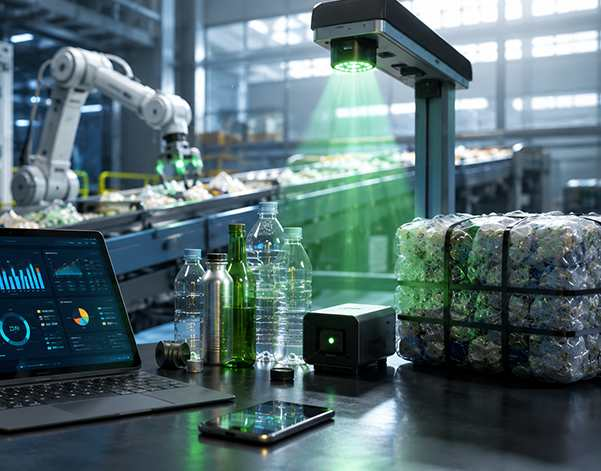
Digital compliance platforms, AI-powered reporting, blockchain traceability, and data analytics are simplifying EPR management. These technologies enable organizations to track waste flows, automate reporting, improve supply chain transparency, and meet evolving regulatory requirements efficiently.

5. Why EPR Supports ESG and Circular Economy Goals
EPR, ESG and Circular Economy:
An effective EPR strategy strengthens Environmental, Social, and Governance (ESG) performance by encouraging responsible production and consumption. It helps businesses reduce waste generation, increase recycling rates, conserve natural resources, and demonstrate commitment to sustainable development.

6. How Businesses Can Prepare for the Future
EPR Strategy for Future Compliance:
Organizations should regularly monitor changing regulations, strengthen supplier collaboration, invest in digital compliance systems, and design products with recyclability in mind. A proactive EPR strategy minimizes compliance risks while creating long-term environmental and business value..